On-Site Lineboring vs Sending It to a Machine Shop: The Real Downtime Cost
Oct 24, 2026
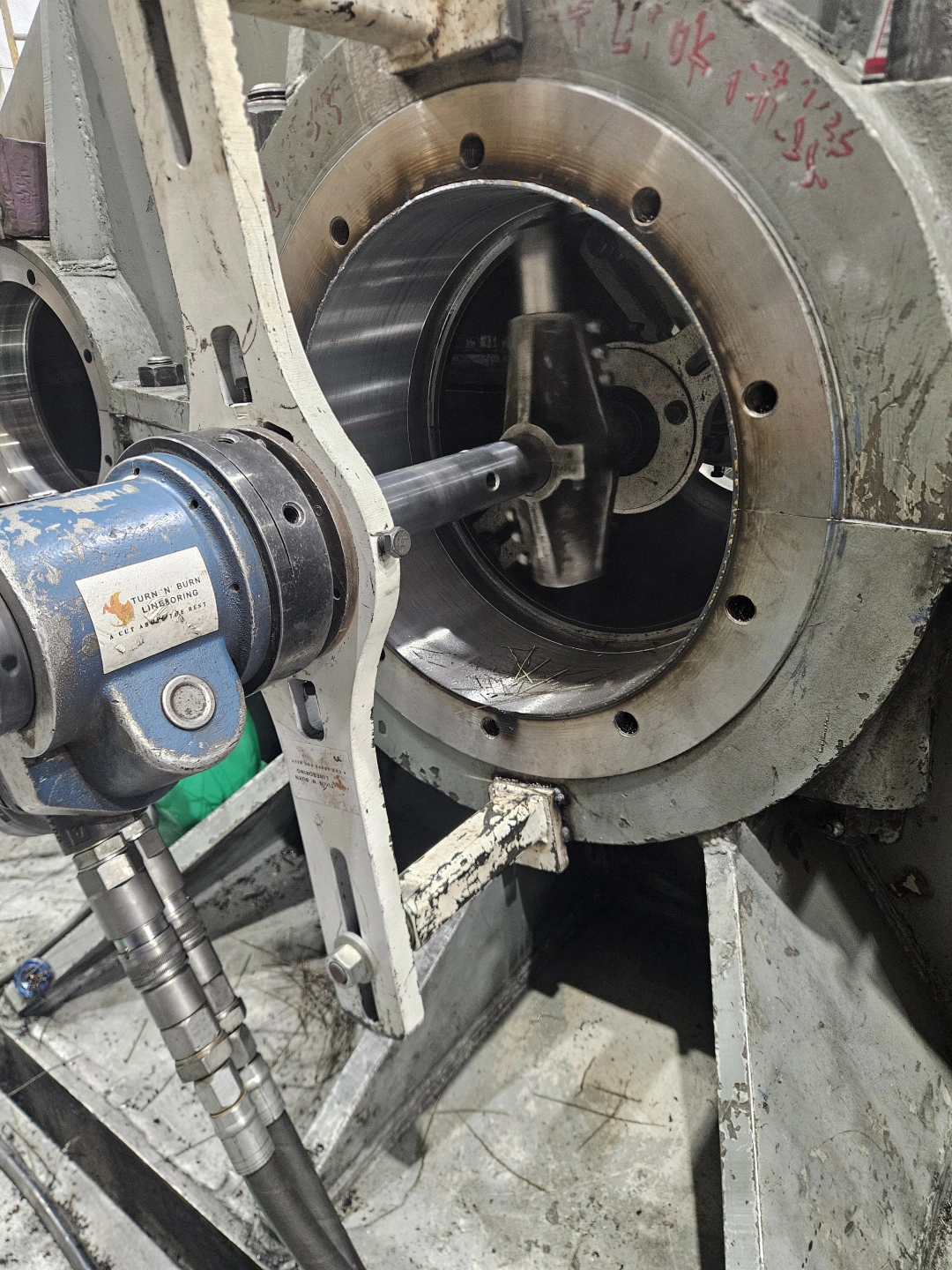
A worn bore rarely fails politely. It shows up as slop in the pin, a knock under load, or a machine that suddenly won't hold tolerance — usually on a shift when you need it most.
At that point most crews face one decision: pull the component and send it to a machine shop, or have the bore machined while it's still sitting in the machine. The quote from each route is not the number that decides it. Downtime is.
Turn'N'Burn Lineboring has been repairing bores on site for over 18 years, working out of Calliope and across Queensland for mining, civil construction, agricultural, marine and heavy equipment customers. This is a straight comparison of the two routes — what each one actually involves, what it costs beyond the invoice, and where a machine shop is still the right call.
What "sending it to a shop" actually involves
On paper, the shop route is simple: remove the worn part, send it away, get it back repaired. In practice, that one line hides eight steps.
Diagnosis and measurement — confirm which bore is worn and by how much before anything comes apart.
Disassembly — pins out, linkages apart, hoses and guards moved. On large plant this can be a shift or more on its own.
Lifting and loading — a boom, arm, bucket, housing or cylinder that now needs a crane, an excavator, or a tilt-tray to move.
Transport — trucking to the shop, and often a second trip for the rest of the machine or the mating components.
Queue time at the shop — your job joins their backlog. This is the step nobody quotes, and it is usually the longest.
Machining — the actual repair, which is often quick relative to everything around it.
Transport back — another truck, another lift, another window in the schedule.
Refit and realignment — reassemble, re-pin, and check alignment and clearances all over again.
Only step 6 is the repair. Steps 1 to 5 and 7 to 8 are the penalty you pay for moving the component instead of the machine.
The costs that never appear on the invoice
Every one of those steps has a cost attached, and most of them land on your side of the ledger, not the machine shop's.
Plant standing idle. Whether it's an excavator, a loader, a drill rig, a harvester or a marine engine, an idle machine still carries its ownership cost while producing nothing. That's the real hourly rate you should be comparing against.
Labor on standby. Fitters, operators and supervisors don't disappear while a component is away. They either wait, or they get moved and have to be brought back to the job.
Crane and hire equipment. Lifting gear, franna time, or a replacement machine hired to cover the gap.
Double handling. Every load and unload is another chance to damage a machined surface, lose a shim or bend something that was straight when it left.
Weld build-up work. A badly worn bore usually needs to be built back up before it can be machined. If that happens in a shop, it adds another step to the chain; on site it's part of the same setup.
Schedule knock-on. A machine missing its window pushes every job behind it — haul cycle, road program, harvest, shutdown.
Refit misalignment. Reassembly is where alignment problems surface. If a bore has to come back out, the whole chain starts again.
Add those up for your own operation using your own hourly costs, and the gap between the two routes is usually far wider than the difference in machining price.
How on-site lineboring removes the chain
Lineboring is the process of machining a bore back to correct size and alignment by rotating a boring bar through it. Mobile lineboring does the same job with the component still in place on the machine.
Turn'N'Burn runs a fully equipped mobile trailer and a mine-site-compliant truck carrying its own 40KVA generator, with lineboring capacity from 38mm to 900mm. That setup means:
No disassembly and no transport. We come to the machine — pit, pad, paddock, workshop, hardstand or wharf — and set up on the bore that needs repair.
No queue. The job is booked for your machine, not slotted into a shop's backlog.
Alignment set from the machine itself. Setup references the existing bore and the machine's own geometry, so alignment is established in the position the component actually works in.
Bore welding and lineboring in one operation. Worn, scored or oval bores are built back up with weld and machined back to size, using the same setup.
More than one wear point in the same setup. Bush and bearing removal and installation, drilling, thread repairs and broken bolt removal can be handled while the equipment is already down.
One mobilisation, one refit. Because nothing came apart, refit is limited to the parts that were actually removed — typically pins and linkages, not the whole assembly.
Works in remote locations. The trailer and truck carry their own power, so a site with no available supply is not a blocker.
Around the clock. Breakdowns don't keep business hours, so the mobile service runs 24/7 for urgent, downtime-sensitive work.
Where a machine shop is still the right call
On-site lineboring isn't the answer to everything, and anyone who tells you otherwise is selling. Sending the work out makes more sense when:
The bore is outside the 38mm to 900mm range and needs bench machining on a lathe or borer.
The component is already stripped for a full rebuild, so transport is happening anyway.
The repair needs processes that can't be done in the field — heat treatment, major casting repair, or line boring of a bare housing that has to be set up on a bench.
You're producing or remanufacturing multiple identical components rather than repairing one machine.
Most of the time, though, the machine is needed back in service and the bore is one of a handful of wear points on an assembly that is otherwise sound. That's the case mobile lineboring was built for.
Comparing the two routes side by side
What it costs youMachine shop routeOn-site lineboring routeDisassemblyFull strip of the assemblyPins and linkages onlyLifting and crane timeUsually required, twiceNot requiredTransportBoth ways, often multiple loadsNoneQueue timeShop backlog, unquotedBooked for your machineWeld build-up of worn boreSeparate step in the chainSame setup as the boreRelated weld, thread and bush workExtra trips between tradesSame visit, same setupAlignmentRe-established after refitSet on the machinePlant idle hoursExtended by every step aboveCompressed to the repair itselfRemote or no-power sitesAdds logisticsSelf-powered truck and trailer
Mobile lineboring across Queensland
Where the machine sits decides how much of that chain you're exposed to. A shop 600km away turns a machining job into a logistics project.
Based in Calliope, Turn'N'Burn services mine sites, farms, workshops, civil projects and heavy equipment operations across Queensland, including Gladstone, Rockhampton, Biloela, the Bowen Basin, Moura, Rolleston, Blackwater, Moranbah, Clermont, Middlemount, Emerald, Nebo, Dysart, Collinsville, Mackay, Mount Isa, Longreach, Roma, Dalby, Toowoomba, the Darling Downs, Brisbane and surrounding locations.
If the machine is in the field, the truck and trailer are set up to get to it and work independently once they arrive.
What to have ready when you call
To get a straight answer quickly — including whether the bore can be done on site — have these on hand:
Machine make, model and what the component is (boom, arm, bucket, linkage, cylinder, housing, bearing seat).
Bore diameter, or a photo with a tape or rule across the bore.
How many bores are worn, and whether bushes, bearings, threads or bolts are damaged too.
Site location and access — can a truck and trailer get to the machine, and is the ground firm?
Whether the machine is already down, or a window is coming up.
Any known history: previous repairs, weld repairs, cracks.
That information is usually enough to tell you whether it's a mobile job or a bench job before anyone commits.
Get the machine back in service
If a bore is worn and the machine is needed, the fastest way to an answer is to send the details through. Turn'N'Burn Lineboring repairs bores from 38mm to 900mm on site, with bore welding, machining, bush and bearing work, thread repairs and fabrication, for mining, engineering, civil, agricultural and marine customers across Queensland — around the clock.
Head to turnnburn.com.au and tell us what you need, where the work is located and how urgent it is. Urgent breakdowns and downtime-sensitive work are prioritised.
Frequently asked questions
Can a worn bore be repaired without removing the component? In most cases, yes. Mobile lineboring machines the bore in place on the machine, including weld build-up of worn, scored or oval bores, as long as the bore falls within the 38mm to 900mm range and the site is accessible.
How worn is too worn for on-site repair? It depends on how much material has to come back. Heavy wear and ovality are usually handled with bore welding before machining. Cracks through the casting, or damage beyond the boring range, are the cases that need assessment or bench work.
Do you need power on site? No. The mobile setup carries its own 40KVA generator, and the truck is mine-site compliant for site access requirements.
Can bushes, bearings and threads be repaired at the same time? Yes. Bush and bearing removal and installation, drilling, thread repairs and broken bolt removal can be dealt with during the same setup while the machine is down.
Where are you based, and how far do you travel? Turn'N'Burn is based in Calliope in Central Queensland and works across the state, from the Bowen Basin and Gladstone region to Mount Isa, Longreach, the Darling Downs, Toowoomba, Brisbane and surrounding areas.
Are you available after hours? Yes. The mobile service operates around the clock for breakdowns and downtime-sensitive repairs.