When Does a Worn Bore Need Lineboring? A Practical Guide for Maintenance Crews
Oct 25, 2026
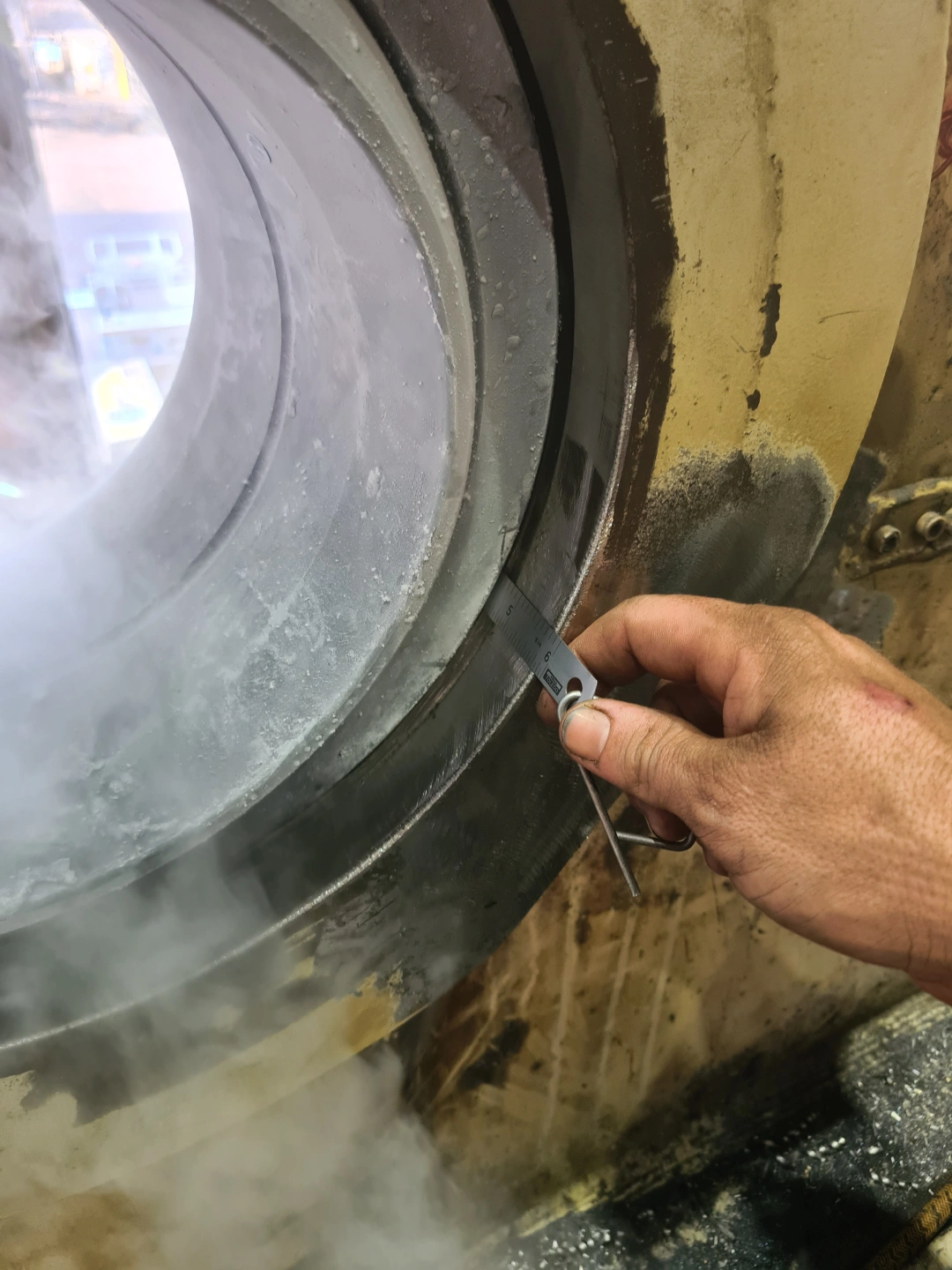
Every pin joint wears. The question that actually matters on the workshop floor is not whether a bore is worn, but whether it is worn enough to justify pulling the machine apart — or calling in a mobile lineboring crew.
Get that call right and you save a week of downtime. Get it wrong and you either throw money at a bore that had life left in it, or you bolt a new pin into an oval hole and do the whole job again in three months.
This guide covers the practical checks we use on site, the numbers worth measuring, and the point where lineboring beats every other option.
Start With the Symptom, Not the Bore
Bores rarely announce themselves. What you notice first is the behaviour:
Slop in the pin joint — visible movement at the boom, stick, bucket, linkage or steering pivot when the machine is loaded up.
Knock under load — a dull thud that follows the hydraulic cycle rather than the engine.
Uneven tyre or track wear on steer axles where bore wear has changed the geometry.
Grease that will not stay in — it pumps straight out past a worn seal or a cracked bush.
Cracks radiating from the bore on high-hour loader arms and excavator booms.
If the machine is doing any of these, the next step is measurement, not guesswork.
Measure It Properly
Eyeballing a bore through a greasy pin hole tells you nothing useful. Two measurements decide the job:
Out-of-roundness. Measure the bore at several points around its circumference with an internal micrometer or bore gauge. A bore that reads differently at 90 degrees to the load axis is oval — the pin is hammering, not rotating.
Diameter versus spec. Compare readings against the manufacturer's nominal bore and pin diameter.
As a rough rule used across heavy equipment maintenance:
Up to roughly 0.3mm clearance beyond nominal: still serviceable. Keep greasing and monitor.
Around 0.5mm to 1.0mm: wear is real. Bush replacement or pin replacement may still be viable if the bore is round and uncracked.
Beyond roughly 1.0mm, or any measurable ovality: the bore is past what a bush will reliably hold. This is lineboring territory.
Those figures move with the application. A bucket linkage on a 30-tonne excavator hammering 10 or even 12 hours a day is not the same as a low-hour ag hitch. Load cycles, pin hardness and grease discipline all shift the threshold, which is why measurement beats a rule of thumb every time.
The Five Options, Ranked by What They Cost You
When a bore is worn, there are five realistic paths. The right one depends on wear depth, whether the bore is cracked, and how fast you need the machine back.
1. Keep running and monitor. Fine for early wear on non-critical pivots. Costs nothing now, costs more later.
2. New pin and bush. Works when the bore itself is still round and to size. Cheap in parts, expensive in labour because the joint still has to come apart.
3. Weld and grind by hand. A field fix for light damage on small bores. It is hard to hold alignment, and it does not restore a true centreline.
4. Send the component to a machine shop. Accurate, but the component has to come off the machine, be transported, queued, machined and returned. That transport and queue time is usually the biggest single cost on the job — bigger than the machining itself.
5. On-site lineboring. The bore is machined in place, on the machine, to a true centreline, with the component never leaving the site.
Where On-Site Lineboring Wins
On-site lineboring is the right call when:
The component is too big, too heavy or too integrated to remove economically — excavator booms and sticks, loader arms, dragline and shovel components, drill rigs, ag implements.
Alignment across two or more bores matters. A lineboring bar is references off the existing centreline and machines multiple bores in line, so pin alignment is correct by design rather than by hope.
Downtime is the dominant cost. A machine sitting in a workshop queue produces nothing.
The bore needs rebuilding, not just rebushing — that is where bore welding comes in.
Turn'N'Burn Lineboring runs mobile, on-site lineboring and bore welding across 38mm to 900mm, with over 18 years in the trade, working from a fully equipped trailer with Climax boring equipment, Miller welders and a 40kVA generator. That range covers everything from small linkage pins to large mining bores, and the generator means the job does not depend on site power being available.
What the Job Actually Involves
A typical on-site lineboring job runs like this:
Assess and measure the bore, check for cracks and confirm whether the repair is machining, welding, or both.
Set up and align the boring bar to the existing centreline, referencing off undamaged bores where possible.
Pre-machine, weld and machine the bore back to size — welding first where material has to be added back.
Check fit against the new pin or bush and confirm alignment across the joint.
Hand back the machine, ready to go back to work.
Most single-bore jobs are done in a day, and the machine never leaves the site.
The Mistakes We See Most
Replacing pins and bushes into a worn bore. The new bush rattles loose within days and the wear accelerates.
Greasing harder to compensate for wear. No volume of grease fixes an oval bore.
Ignoring cracks around the bore. Machining a cracked bore just relocates the problem; the crack needs addressing first.
Judging wear by feel. A bore can feel tight by hand and still be 0.2mm out of round under load.
Leaving it until something breaks. The cheapest lineboring job is the one booked before the pin tears the eye out of the arm.
A Simple Decision Rule
If the bore is round and within a couple of tenths of a millimetre of nominal, a pin and bush will usually do the job. If it is oval, past roughly 0.3mm, cracked, or on a component you cannot economically remove, it needs lineboring — and if material is missing, it needs bore welding followed by lineboring in the same setup.
When in doubt, measure and get a second opinion before the component comes off the machine. The cost of a measurement is nothing next to the cost of a machine parked in a queue.
Need a bore looked at? Turn'N'Burn Lineboring provides mobile on-site lineboring and bore welding from 38mm to 900mm for mining, civil, agribusiness and heavy machinery crews. Get in touch with the measurements and photos, and we will tell you straight whether it needs machining or a pin and bush.