Bore Welding Explained: How a Worn Bore Is Built Back and Machined to Size
Oct 26, 2026
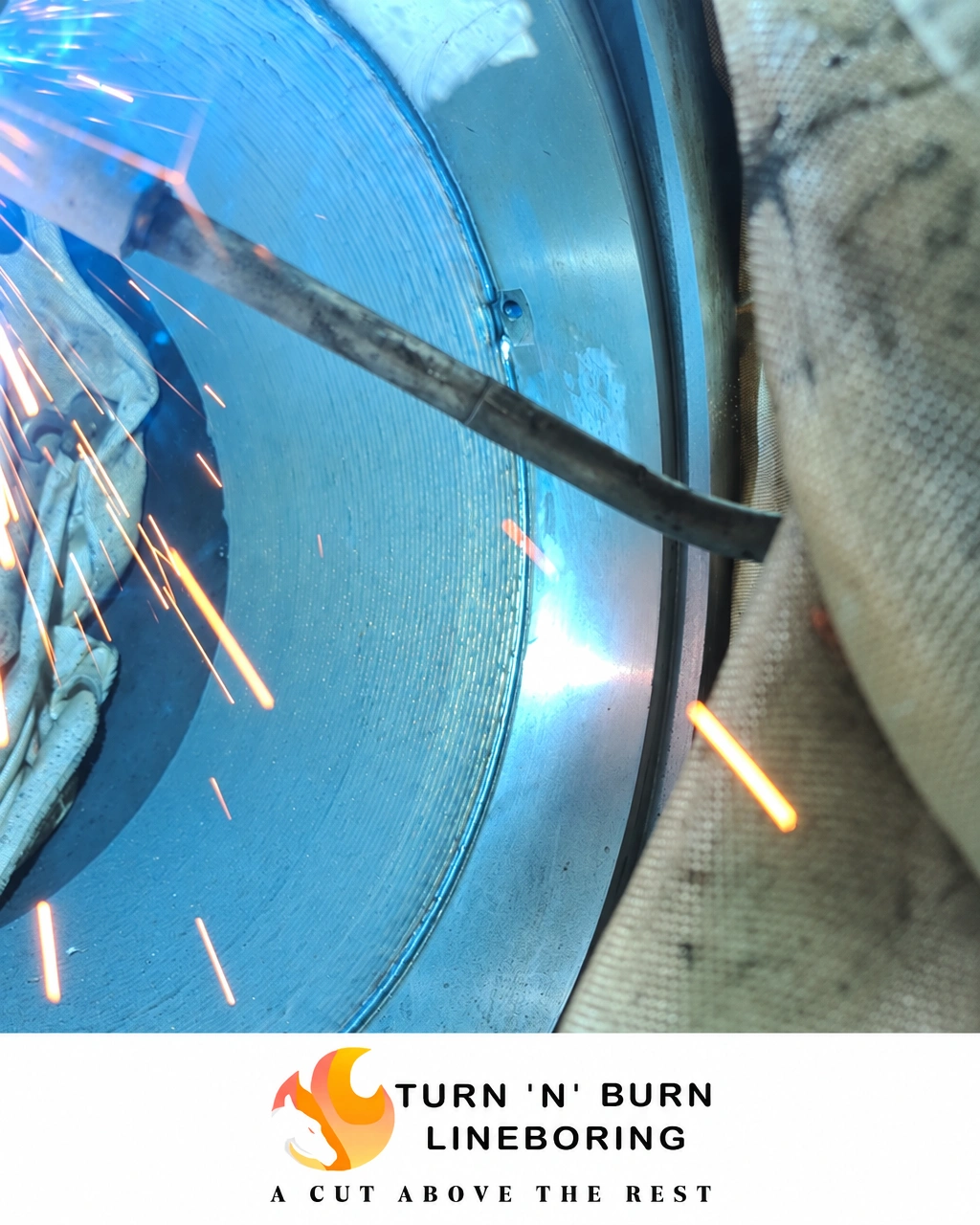
A worn bore rarely lets go in one shift. It goes oval, then tapered, then scored, and the pin starts working against a hole that is no longer round. By the time the bush is loose enough to move, a simple re-bush will not get the job done — there is too much metal missing.
That is where bore welding comes in. It is the second half of most worn bore repairs, and it is the step that gets skipped in a lot of quotes.
What bore welding does
Bore welding puts metal back into a bore that has already been machined out clean, round and straight. The bore is left oversize on purpose, the weld builds it back below original size, and a final machining pass cuts it to the correct diameter and finish.
The two operations run in sequence:
Lineboring removes worn, oval, tapered or scored metal and leaves a clean, round, straight hole at an oversize diameter.
Bore welding adds material back into that oversize bore as a controlled build-up.
Final machining cuts the weld back to OEM bore diameter and finish, ready for the bush or bearing.
Skip the welding step and you are fitting an oversize bush into a worn bore. That works until it does not.
How the weld is laid
Most bore welding is done with an automatic bore welding head set up on the same bar system as the boring bar. The torch sits in the bore and welds around the circumference while the head advances its way out of the bore, laying a spiral bead. On bigger or awkward jobs the same build-up is done with a track welder, or by hand where the shape of the component dictates it.
What matters is not the brand on the machine. It is that the weld goes in evenly, in the right place, with the heat controlled so the surrounding casting or fabrication does not pull.
What the job looks like on site
On a mobile job the order is roughly this:
Measure: bore gauge and micrometer on the bore, record size, ovality and taper, check for cracks in the bore and around the boss.
Set up: boring bar aligned to the original centreline of the joint, referenced off the undamaged bore on the opposite side of the pin where one exists.
Machine out: cut the damaged metal out until the bore is clean, round and straight.
Weld up: automatic bore welder lays material back into the bore to suit the final size.
Machine back: cut the weld to OEM bore diameter and finish.
Fit: install the new bush or bearing, using liquid nitrogen shrink fitting where the interference fit calls for it.
All of that happens with the component still on the machine. Capacity runs from 38mm to 900mm, which covers anything from a small linkage pin bore to a large dipper and bucket bore.
When a bore needs welding, not just lineboring
Bore welding is usually the right call when:
the bore is worn past cleaning up at OEM size;
a previous repair has already taken it oversize;
the bore is cracked, spalled or gouged and needs sound metal before it can be cut;
a build-up has been done before and the repair needs redoing;
you want to keep the original pin and bush size rather than have custom oversized pins or bushs made.
Why the setup decides the outcome
A bore that has been welded and machined can still be wrong. If the bar was not aligned to the centreline, or the reference points were worn, the finished bore will be round but out of position — and the pin will load the bush on one edge from the first shift. Getting the setup right means:
an alignment you can measure, not eyeball;
a reference off a bore you trust, not off the damaged one;
heat input controlled so the boss does not pull;
measuring between steps instead of assuming the weld landed where it was aimed.
More than 18 years in the trade, and most of the bore repairs that come back are setup problems from somewhere else, not weld problems.
On site versus sending it away
Taking the machine to a workshop means removing the component, transporting it in, waiting for a shop slot, transporting it back and reinstalling. The bore repair might be a day of machining. The freight and the queue around it are the part that stops production.
Mobile lineboring and bore welding removes that. A mine-site-compliant truck and a fully equipped trailer with a 40KVA generator, Climax boring equipment and Miller welders get set up at the machine. The component stays where it is still pinned to the machine.
Based in Calliope, mobile 24/7 across Queensland — Bowen Basin, Gladstone, Rockhampton, Biloela, Moura, Blackwater, Moranbah, Emerald, Mackay and surrounding sites. Urgent breakdowns and downtime-sensitive work get answered first.
What to send with the enquiry
Details that let the job be planned properly:
bore diameter, measured if it is already out;
the machine and the component — bucket, stick, boom, loader arm, linkage, cylinder eye;
site location and access;
how urgent it is, and whether the machine is already down;
photos of the bore and the boss, if you have them.
Send bore size, machine or component, site location and how urgent the job is, and it can be quoted and scheduled from there.