Bore Welding On-Site: How Worn Bores Get Rebuilt Without Pulling the Machine Apart
Oct 25, 2026
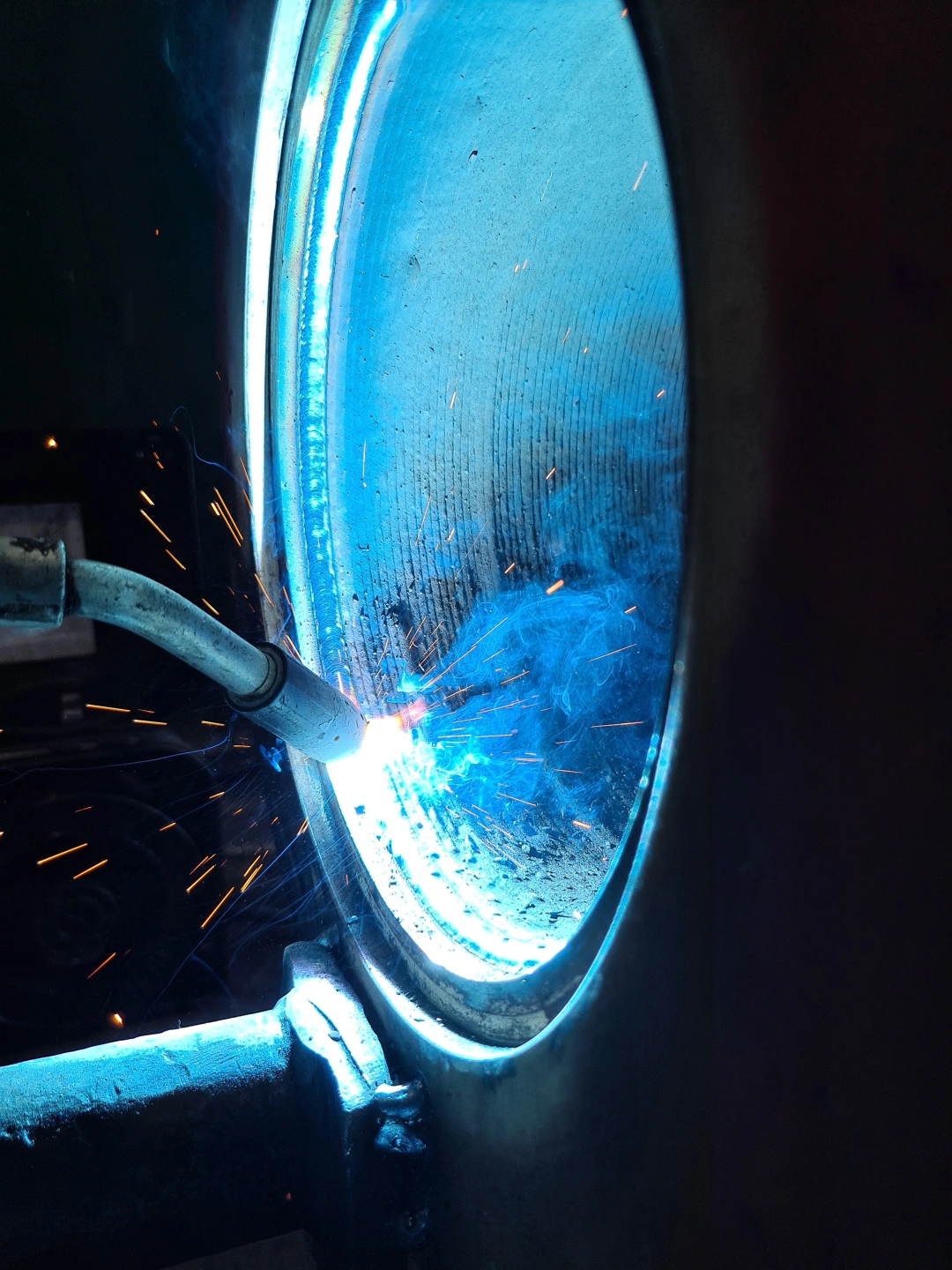
A bore that has lost metal cannot be machined back to size — there is nothing left to cut. It has to be built back up first. That is where bore welding is done on site it means the repair happens on the machine, in position, without a crane, a float or a workshop queue.
Here is how it works, what it suits, and where it goes wrong.
What Bore Welding Actually Is
Bore welding is a buildup style repair where new weld material is laid down on the internal surface of a worn bore, then machined back to the correct diameter and a true centreline.
Two parts, in this order:
Weld — deposit material around the worn bore to restore wall thickness and diameter.
Linebore — machine the welded bore back to OEM spec, in line with its mating bores.
Skip the second step and you have a rough, distorted hole. The weld is only half the job.
When a Bore Needs Welding Rather Than Just Machining
Lineboring alone removes material. It works when the wear is small enough that machining to a slightly larger, clean diameter is acceptable — usually with an oversized bush or pin to match, which usually requires custom made parts, instead of OEM parts just off the shelf.
Bore welding is the right call when:
Wear is deep. The bore has gone well past what an oversize cleanup can recover.
The bore is oval or bell-mouthed. Hammered ends need material put back, not just skimmed.
The bore has cracked or torn out. Weld rebuild is often the only way to save the component.
A standard size must be kept. If the pin or bush size is fixed — common with OEM parts and critical geometry — you have to restore the original diameter rather than open it up.
The eye has been sleeved before and the sleeve is gone. Rebuilding the parent metal is more reliable than chasing another insert.
Why Doing It On-Site Matters
The alternative is pulling the component and sending it to a machine shop. For a small linkage that is fine. For an excavator boom, a loader arm, a shovel component or a large ag implement, removal is the expensive part:
Crane or lifting equipment and a safe working area
Transport both ways, plus workshop queue time
Reassembly, alignment and re-torquing afterwards
Days of production lost on a machine that would otherwise be earning
On-site bore welding keeps the component in its own machine. Alignment references stay intact, the machine stays on site, and the repair happens inside your maintenance window.
Turn'N'Burn Lineboring works mobile from a fully equipped trailer — Climax boring equipment, Miller welders and a 40kVA generator — covering bores from 38mm to 900mm, with over 18 years of experience across mining, civil, agribusiness and heavy machinery maintenance.
The Process, Step by Step
1. Assess. Measure the bore, check for cracks, confirm wall thickness and decide whether welding is viable or whether a sleeve or replacement is the better answer.
2. Prep. Clean the bore back to bare, sound metal. Grease, paint and contaminants cause porosity and poor fusion — prep is where most weld failures begin.
3. Set up the bar. Align the boring bar to the true centreline of the joint, referencing undamaged bores where possible.
4. Pre-machine bore. this allows for a good clean surface to weld to and also allows a chance to see what might be hidden under the surface from pervious poor reclaim work e.g. porosity or peel out from lack of fusion.
5. Weld. Build up the worn surface in controlled passes, managing heat so the surrounding eye does not distort or crack. Pre-heat and controlled cooling are used where the steel grade calls for it.
6. Machine. Bore the welded surface back to the OEM spec with the same setup, so the weld and the finished diameter share one centreline.
7. Check and finish. Verify diameter, roundness and alignment across the joint, then confirm the new pin or bush fits as it should.
Because the welding and the machining run off the same setup, the finished bore is round and in line — the two things that determine whether the repair lasts.
Where Bore Welding Goes Wrong
Welding without controlling heat. Too much heat in one spot distorts the bore and can crack the surrounding casting or forging.
Welding dirty steel. Porosity and lack of fusion, followed by the weld breaking away under load.
Welding a cracked bore without addressing the crack. The crack propagates through the new weld.
Welding on a bore that is too thin. Sometimes there is simply not enough parent metal left; a replacement part is the honest answer.
Machining off-centre after welding. The repair looks good and the pin still flogs out, because the bore is not in line with its mating bore.
No post-repair grease discipline. A rebuilt bore will wear out again if the joint is not greased properly. Check the grease path and fittings while the machine is apart.
What It Costs You Compared With the Alternatives
Bore welding is rarely the cheapest line on the quote.
What it usually avoids is: a crane hire, a float both ways, a week in a workshop queue, and a machine sitting idle. Across heavy equipment maintenance, the difference between a one-day on-site repair and a component that leaves site for a fortnight is almost always the larger number — and that is before you count the production the machine would have delivered.
Getting a Straight Answer
Before committing to bore welding, you want three things confirmed:
How much material is gone — depth and ovality, measured, not guessed.
Whether the surrounding metal is sound — cracks, previous repairs, wall thickness.
What the component has to end up at — original size with a standard pin, or an oversize to suit a non-standard bush or pin.
Send through the bore size, machine and component details, and photos of the damage, and we will tell you straight whether it is a weld-and-bore job, a straight linebore, or something a new part would serve better.
Need a worn bore rebuilt? Turn'N'Burn Lineboring provides mobile on-site lineboring and bore welding from 38mm to 900mm. We come to the machine, weld it back to size and machine it true — so it goes back to work, not into a queue.